

Smart Factory: 7 Proven Ways to Boost Productivity Fast
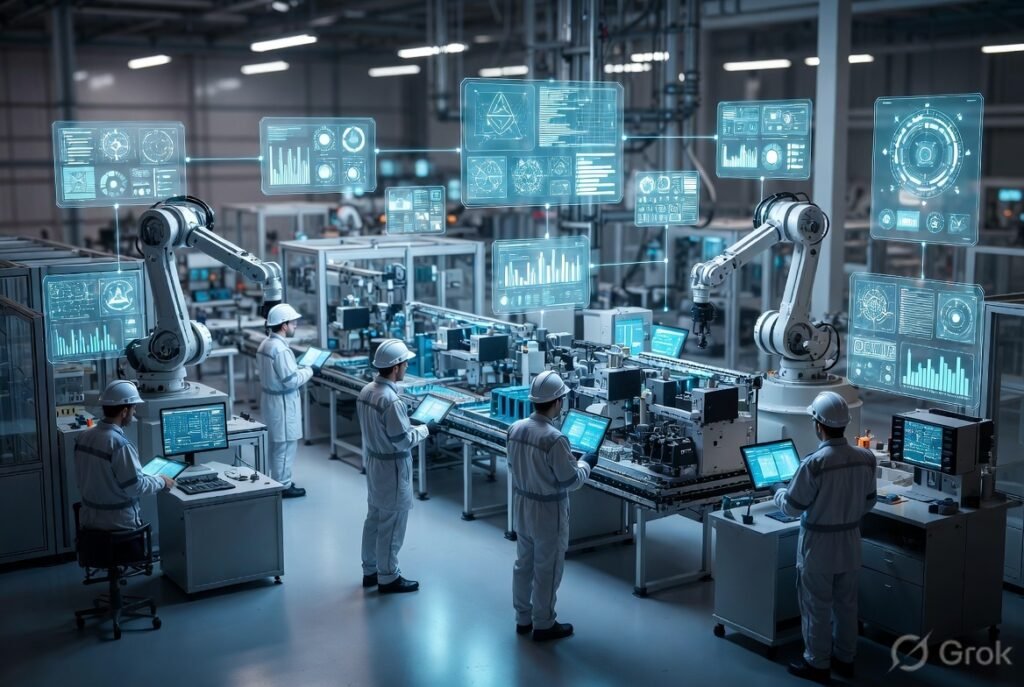
A few years ago, factories depended heavily on manual work and constant supervision. Today, things look very different. Machines now talk to each other. Systems adjust automatically. Decisions happen in real time.
This shift is what people call the smart factory revolution.
At its core, the concept of Smart Factory: 7 Proven Ways to Boost Productivity Fast is about combining automation, data, and intelligence to improve production speed and accuracy. It is not just about machines. It is about how everything connects and responds.
Factories that adopt this model see fewer delays, less waste, and stronger output. Most importantly, they stay competitive in a fast-changing market.
Let’s break down how this actually works in real industrial environments.
Smart Factory and Real Productivity Gains
A smart factory uses connected systems, sensors, and software to monitor every stage of production. This helps managers understand what is working and what is not.
Unlike traditional setups, decisions are not delayed. They are instant and data-driven.
The idea behind Smart Factory: 7 Proven Ways to Boost Productivity Fast is simple. Improve visibility, reduce waste, and automate repetitive work.
As a result, production becomes smoother and more predictable.
1. Smart Automation of Repetitive Tasks
Automation is the backbone of any smart factory. Machines handle repetitive tasks with consistency and speed.
For example, robotic arms in assembly lines reduce human effort and increase output. Workers can then focus on quality control and supervision.
This improves:
- Production speed
- Accuracy of output
- Workforce efficiency
- Operational consistency
When automation is applied correctly, productivity improves almost immediately.
2. Real-Time Data Monitoring for Better Control
Data is the new engine of manufacturing.
In a smart factory, sensors collect live information from machines. This includes temperature, speed, vibration, and performance levels.
Managers can see issues before they become failures.
This is a key part of Smart Factory: 7 Proven Ways to Boost Productivity Fast because real-time data reduces downtime.
Benefits include:
- Faster decision-making
- Early problem detection
- Reduced machine failure
- Better production planning
Factories that ignore real-time data often struggle with delays and unexpected breakdowns.
3. Predictive Maintenance to Avoid Downtime
Machine breakdowns can stop production completely. That is expensive and stressful.
Predictive maintenance solves this problem. It uses sensors and AI to detect early warning signs.
Instead of waiting for failure, maintenance teams act in advance.
For example, if a motor shows unusual vibration, the system alerts engineers immediately.
This reduces:
- Unexpected downtime
- Repair costs
- Production delays
It is one of the most important elements of Smart Factory: 7 Proven Ways to Boost Productivity Fast.
4. AI-Based Quality Control Systems
Quality issues can destroy efficiency. A single defect may lead to wasted materials and customer complaints.
Smart factories use AI-powered inspection systems. These systems scan products in real time and detect even small defects.
Unlike manual inspection, AI does not miss details.
Advantages include:
- Consistent product quality
- Reduced rejection rates
- Faster inspection cycles
- Lower waste levels
This leads to better customer satisfaction and stronger brand trust.
5. Energy Optimization Across Production Lines
Energy costs are rising everywhere. Smart factories manage energy usage more efficiently.
Sensors track how much energy each machine uses. Systems then adjust usage automatically.
For example, machines that are not in use can switch to low-power mode.
This helps in:
- Reducing electricity bills
- Lowering carbon footprint
- Improving sustainability
- Increasing operational efficiency
Energy efficiency plays a major role in Smart Factory: 7 Proven Ways to Boost Productivity Fast because it directly impacts profit margins.
6. Connected Supply Chain Systems
Production does not happen in isolation. It depends on raw materials, logistics, and demand planning.
Smart factories connect supply chain systems with production systems.
This ensures materials arrive on time and production never stops due to shortages.
Benefits:
- Better inventory control
- Reduced storage costs
- Faster order fulfilment
- Smooth production flow
When supply chains are connected, factories operate with fewer interruptions.
7. Workforce Collaboration with Digital Tools
A smart factory does not replace humans. It empowers them.
Digital dashboards, mobile apps, and cloud platforms help workers stay informed.
Teams can communicate faster and solve issues quickly.
For example, a technician can receive machine alerts directly on a mobile device.
This improves:
- Team coordination
- Response time
- Decision accuracy
- Workplace productivity
Human intelligence and machine intelligence work together in this model.
Why Smart Factories Are Becoming the Standard
Industries are shifting rapidly toward automation and digital systems. The reason is simple.
Traditional factories cannot keep up with demand, competition, and quality expectations.
Smart factories offer:
- Higher productivity
- Lower operational costs
- Better quality control
- Faster production cycles
This is why Smart Factory: 7 Proven Ways to Boost Productivity Fast is not just a concept. It is becoming a necessity.
Real-World Example
A mid-sized automotive parts manufacturer in India implemented smart sensors and predictive maintenance systems.
Within six months:
- Machine downtime reduced by 30%
- Production output increased by 22%
- Energy costs dropped by 15%
The investment paid for itself quickly.
This shows how practical smart factory systems can be.
Frequently Asked Questions
What is a smart factory?
A smart factory uses connected machines, sensors, and data systems to improve production efficiency and reduce costs.
Is smart factory technology expensive?
Initial setup costs can be high, but long-term savings in labour, energy, and maintenance make it cost-effective.
Can small factories use smart systems?
Yes. Many solutions are scalable and suitable for small and medium businesses.
Does it replace human workers?
No. It supports workers by automating repetitive tasks and improving decision-making.
Moving Toward Smarter Manufacturing
Factories that adopt digital systems early gain a strong advantage. They operate faster, waste less, and respond better to market demand.
About The Author
