Device Authentication: 7 Proven Ways to Stop Threats
The Biggest Security Risk Might Already Be Connected
A company spends thousands on firewalls, antivirus software, and security monitoring. Yet one unverified device connects to the network and creates an opening for cybercriminals. Unfortunately, this scenario happens more often than many organisations realise.
As businesses continue connecting sensors, smart devices, industrial equipment, and IoT systems, the need for Device Authentication has never been greater. Every connected device must prove its identity before gaining access to a network. Without proper verification, organisations expose themselves to data breaches, malware attacks, and operational disruptions.
This guide explains how Device Authentication works, why it matters, and seven proven ways it helps stop security threats before they become serious problems.
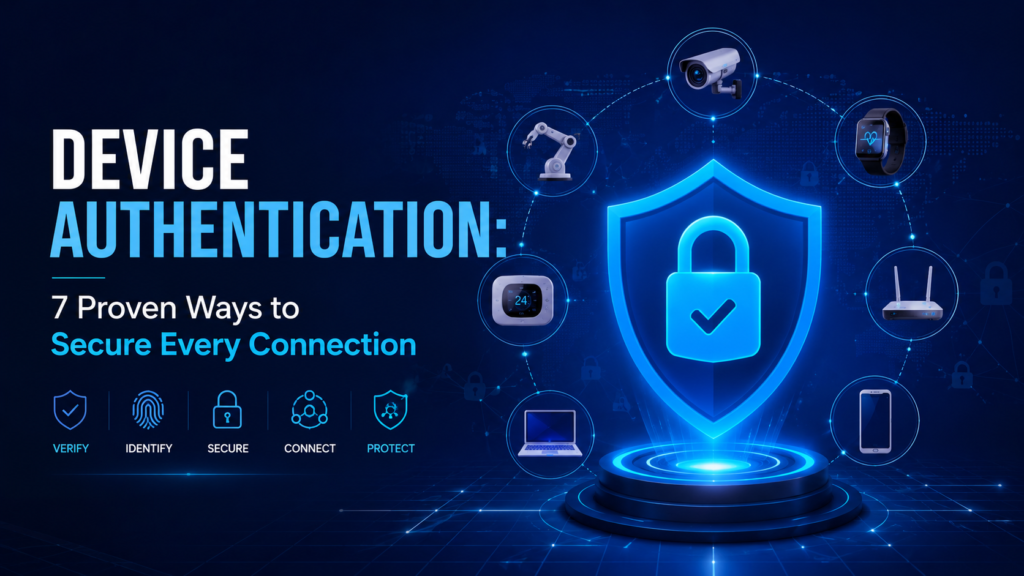
Image Alt Text: Device Authentication system verifying connected IoT devices on a secure network
What Is Device Authentication?
Device Authentication is the process of verifying the identity of a device before it can access a network, application, or system.
Think of it as a digital identity check.
Just as people use passwords or ID cards to prove who they are, connected devices use certificates, credentials, cryptographic keys, or authentication protocols.
The goal is simple:
- Verify device identity
- Block unauthorized access
- Protect sensitive data
- Improve network security
- Build trust between connected systems
As IoT adoption continues to grow, Device Authentication has become a critical cybersecurity requirement.
Why Device Authentication Matters More Than Ever
Modern organisations rely on thousands of connected devices.
These may include:
- IoT sensors
- Smart cameras
- Industrial machines
- Medical equipment
- Mobile devices
- Smart building systems
Each device represents a potential entry point for attackers.
Without Device Authentication, cybercriminals can impersonate legitimate devices and gain access to valuable information.
Consequently, organisations face higher risks of:
- Data theft
- Malware infections
- Ransomware attacks
- Network disruption
- Compliance violations
Strong authentication reduces these risks significantly.
1. Verify Every Connected Device
The first rule of cybersecurity is trust nothing automatically.
Device Authentication ensures every device proves its identity before communication begins.
Authentication systems verify:
- Device credentials
- Digital certificates
- Security keys
- Device fingerprints
Only trusted devices receive access.
As a result, organisations maintain better control over their networks.
2. Prevent Unauthorized Network Access
One of the biggest benefits of Device Authentication is access control.
Attackers often attempt to connect rogue devices to business networks.
Without authentication mechanisms, detecting these devices can be difficult.
However, authenticated networks reject unknown devices immediately.
Therefore, businesses reduce opportunities for cybercriminals to gain access.
3. Strengthen IoT Security
IoT devices have transformed industries. However, they have also introduced new security challenges.
Many connected devices operate with limited computing resources and minimal built-in protection.
Device Authentication helps secure IoT ecosystems by ensuring only approved devices participate in network communications.
This approach supports:
- Secure device onboarding
- Trusted communication
- Identity verification
- Network integrity
As IoT deployments expand, authentication becomes even more important.
4. Use Digital Certificates for Stronger Protection
Digital certificates provide one of the most effective authentication methods.
A certificate acts like a trusted digital passport.
When a device attempts to connect, the network verifies the certificate before granting access.
Benefits include:
- Strong identity verification
- Reduced spoofing risks
- Secure communication
- Improved trust
Many industrial IoT systems rely on certificate-based Device Authentication because it offers high levels of security.
5. Protect Sensitive Business Data
Data is one of the most valuable assets in modern organisations.
Every connected device that accesses company systems can potentially expose sensitive information.
Device Authentication helps protect:
- Customer records
- Financial information
- Intellectual property
- Operational data
By verifying device identities before access is granted, organisations reduce the likelihood of unauthorised data exposure.
Consequently, businesses strengthen their overall cybersecurity posture.
6. Support Zero Trust Security Strategies
Zero Trust has become a leading cybersecurity approach.
The concept is straightforward:
“Never trust, always verify.”
Device Authentication plays a central role in Zero Trust frameworks.
Every device must continuously prove its identity.
Access is granted based on verification rather than assumptions.
This strategy reduces risks even when attackers manage to penetrate network defences.
7. Improve Compliance and Regulatory Readiness
Many industries face strict security and privacy requirements.
Regulations often require organisations to control access to systems and sensitive data.
Device Authentication supports compliance efforts by providing:
- Access verification
- Audit trails
- Identity management
- Security documentation
As a result, organisations can demonstrate stronger security controls during audits and assessments.
Real-World Example of Device Authentication
Consider a smart manufacturing facility with hundreds of connected machines and sensors.
Without authentication controls, a malicious actor could attempt to connect a rogue device to the production network.
After implementing Device Authentication, every device receives a unique digital identity.
The network verifies each connection request automatically.
As a result:
- Unauthorized devices are blocked
- Security incidents decrease
- Operational reliability improves
- Sensitive production data remains protected
This simple change significantly strengthens the organisation’s cybersecurity posture.
Common Device Authentication Methods
Several authentication techniques are widely used across modern networks.
Password-Based Authentication
Devices use usernames and passwords to verify identity.
Although simple, this method requires strong password management.
Certificate-Based Authentication
Digital certificates verify device identities securely.
Many organisations consider this the most reliable approach.
Multi-Factor Authentication (MFA)
MFA combines multiple verification methods.
For example:
- Security certificates
- Authentication tokens
- Device credentials
This creates additional protection layers.
Public Key Infrastructure (PKI)
PKI uses cryptographic keys and certificates to establish trust between devices.
It remains a popular choice for enterprise environments.
Challenges of Device Authentication
While Device Authentication offers significant benefits, organisations may encounter challenges.
Managing Large Numbers of Devices
IoT deployments often include thousands of devices.
Automated identity management solutions can simplify administration.
Certificate Expiration
Certificates require regular renewal.
Organisations should implement certificate lifecycle management processes.
Legacy Systems
Older devices may lack modern authentication capabilities.
In these cases, organisations should consider security upgrades or network segmentation.
Frequently Asked Questions
What is Device Authentication?
Device Authentication verifies the identity of a device before granting access to a network or system.
Why is Device Authentication important?
It prevents unauthorised access, improves security, and protects sensitive data from cyber threats.
Is Device Authentication necessary for IoT devices?
Yes. IoT devices often operate in connected environments and require identity verification to prevent attacks.
What is the most secure authentication method?
Certificate-based authentication and PKI are widely regarded as highly secure options for device verification.
Building Trust in Every Connection
Connected devices create incredible opportunities for innovation. At the same time, they introduce new cybersecurity challenges that organisations cannot ignore.
Device Authentication provides a critical foundation for secure digital operations. It helps verify identities, prevent unauthorised access, protect sensitive information, and support modern Zero Trust security strategies.
As businesses continue adopting IoT, smart infrastructure, and Industry 4.0 technologies, strong authentication practices will become even more important.
Want to strengthen your connected ecosystem further? Explore our guide on IoT Security Best Practices and learn how modern organisations protect devices, networks, and data from evolving cyber threats. You can also learn more about cybersecurity frameworks from the National Institute of Standards and Technology (NIST).
The most secure networks are built on trust—and trust begins with verification.
About The Author