Smart Infrastructure: 9 Powerful Trends to Watch
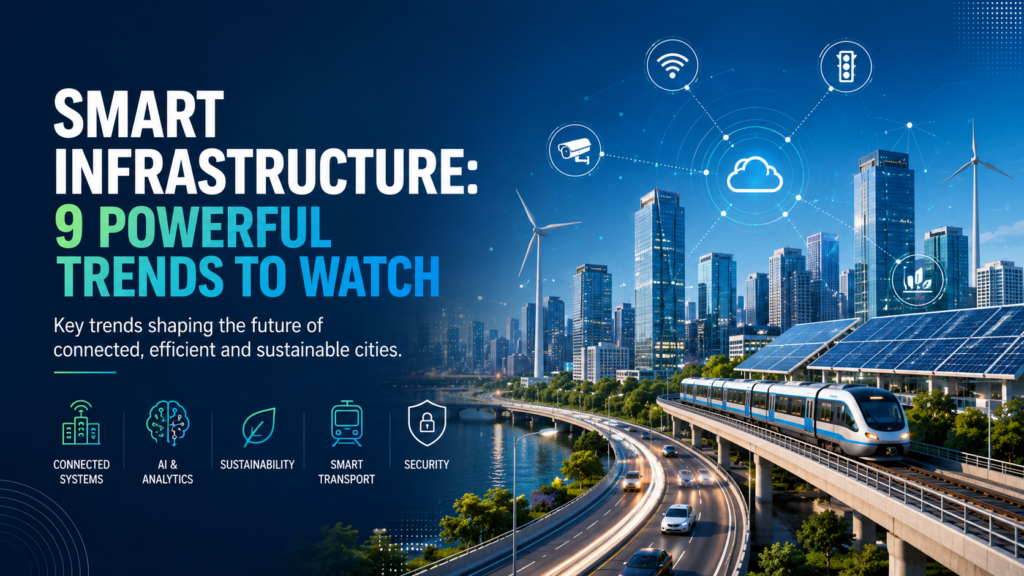
What Is Smart Infrastructure?
Smart Infrastructure refers to physical infrastructure enhanced with digital technologies, sensors, connectivity, and data analytics.
These systems collect and analyse information in real time. As a result, cities and organisations can make faster and better decisions.
Examples include:
- Smart transportation systems
- Intelligent power grids
- Connected water networks
- Smart buildings
- Public safety systems
- Environmental monitoring solutions
Unlike traditional infrastructure, smart systems continuously adapt based on changing conditions.
Why Smart Infrastructure Matters Today
Urban populations are expanding rapidly.
According to global estimates, nearly 70% of people could live in urban areas by 2050. This growth creates significant pressure on transportation, utilities, healthcare, and public services.
Smart Infrastructure helps address these challenges by:
- Improving operational efficiency
- Reducing resource waste
- Enhancing public services
- Lowering operating costs
- Supporting sustainability goals
Therefore, many governments now consider smart infrastructure a critical part of long-term urban planning.
1. IoT-Powered Urban Networks
The Internet of Things continues to be the foundation of Smart Infrastructure.
Thousands of connected sensors collect information from roads, buildings, power systems, and public spaces.
These sensors monitor:
- Traffic flow
- Air quality
- Energy consumption
- Water usage
- Infrastructure health
Consequently, city authorities gain valuable insights that help improve services and reduce inefficiencies.
For example, smart traffic sensors can adjust signal timings automatically to reduce congestion during peak hours.
2. Artificial Intelligence for Better Decision-Making
Artificial intelligence is becoming increasingly important in Smart Infrastructure projects.
AI systems analyse large volumes of data and identify patterns that humans might miss.
Applications include:
- Traffic optimisation
- Energy forecasting
- Predictive maintenance
- Public safety monitoring
- Resource allocation
As AI technology advances, cities can respond to problems more quickly and efficiently.
3. Smart Energy Grids
Energy demand continues to rise across the world.
Traditional power grids often struggle to balance supply and demand effectively. Smart Infrastructure addresses this challenge through intelligent energy management.
Smart grids can:
- Monitor energy consumption
- Integrate renewable energy
- Detect outages quickly
- Improve energy distribution
- Reduce operational costs
Many cities now use smart energy systems to support sustainability targets while improving reliability.
4. Connected Transportation Systems
Transportation remains one of the biggest challenges for growing cities.
Smart Infrastructure is transforming mobility through connected technologies.
Examples include:
- Intelligent traffic management
- Smart parking solutions
- Connected public transport
- Electric vehicle charging networks
- Real-time route optimisation
As a result, commuters experience shorter travel times and reduced congestion.
Cities also benefit from lower emissions and improved traffic flow.
5. Predictive Maintenance for Public Assets
Infrastructure failures can be expensive and disruptive.
Roads, bridges, pipelines, and utility systems require constant monitoring.
Predictive maintenance uses sensors and analytics to identify potential problems before they become serious.
Benefits include:
- Reduced repair costs
- Improved asset lifespan
- Fewer service interruptions
- Better resource planning
This trend is helping cities shift from reactive repairs to proactive maintenance strategies.
6. Smart Buildings and Connected Facilities
Buildings consume a significant portion of global energy resources.
Smart Infrastructure solutions help improve building efficiency through automation and data-driven management.
Modern smart buildings use:
- Occupancy sensors
- Automated lighting systems
- Smart HVAC controls
- Energy monitoring platforms
- Security automation
Consequently, organisations can reduce energy consumption while improving occupant comfort.
Many commercial developments now incorporate smart building technologies from the planning stage.
7. Sustainable Water Management
Water scarcity is becoming a growing concern in many regions.
Smart Infrastructure supports more efficient water management through connected monitoring systems.
These solutions help utilities:
- Detect leaks quickly
- Monitor water quality
- Track consumption patterns
- Improve distribution efficiency
For example, smart water meters allow both consumers and utilities to identify unusual usage patterns before they lead to significant waste.
8. Digital Twins for Infrastructure Planning
Digital twin technology is gaining momentum across infrastructure projects.
A digital twin is a virtual representation of a physical asset or system.
Engineers use digital twins to:
- Simulate infrastructure performance
- Test improvements
- Predict future challenges
- Optimise maintenance schedules
Because of this capability, cities can make informed decisions before implementing costly changes in the real world.
9. Cybersecurity Becomes a Top Priority
As infrastructure becomes more connected, security becomes more important.
Every connected device creates a potential entry point for cyber threats.
Therefore, cybersecurity is now a core component of Smart Infrastructure strategies.
Key security measures include:
- Device authentication
- Data encryption
- Network monitoring
- Access control
- Zero Trust security models
Strong cybersecurity practices help protect critical infrastructure from attacks and operational disruptions.
Real-World Example of Smart Infrastructure
Singapore is often recognised as one of the world’s leading smart cities.
The country has implemented numerous Smart Infrastructure initiatives, including:
- Intelligent transportation systems
- Smart energy management
- Digital government services
- Environmental monitoring networks
These projects have improved urban efficiency while enhancing citizen experiences.
Many cities around the world are now following similar strategies.
Common Challenges in Smart Infrastructure Projects
While opportunities are significant, organisations must also address several challenges.
High Initial Investment
Large-scale infrastructure projects often require substantial funding.
However, long-term efficiency gains can offset these costs.
Data Privacy Concerns
Connected systems collect vast amounts of information.
Strong governance policies help ensure responsible data management.
Technology Integration
Many cities operate older systems that were not designed for digital connectivity.
Careful planning is essential when integrating new technologies.
Frequently Asked Questions
What is Smart Infrastructure?
Smart Infrastructure combines physical infrastructure with digital technologies, sensors, and analytics to improve efficiency and performance.
How does Smart Infrastructure work?
It collects real-time data from connected systems and uses analytics to optimise operations and decision-making.
What technologies support Smart Infrastructure?
Common technologies include IoT, AI, cloud computing, edge computing, digital twins, and advanced analytics.
Why is Smart Infrastructure important?
It helps cities improve services, reduce costs, enhance sustainability, and support growing populations.
Building the Cities of Tomorrow
The future of urban development depends on smarter systems, better data, and stronger connectivity. Smart Infrastructure is no longer an emerging concept. It has become a practical solution for addressing modern challenges in transportation, energy, water management, and public services.
Cities that invest in intelligent infrastructure today will be better prepared for tomorrow’s demands. More importantly, they will create safer, more efficient, and more sustainable environments for future generations.
Want to stay ahead of the latest technology trends? Explore our guide on Smart Energy Management and discover how connected systems are reshaping the future of urban innovation. For additional insights into smart city development, visit the World Economic Forum and explore global infrastructure initiatives.
The next generation of cities is already taking shape—and Smart Infrastructure is leading the way
About The Author