IoT Future Trends Shaping Smart Industry Guide 2026 Now
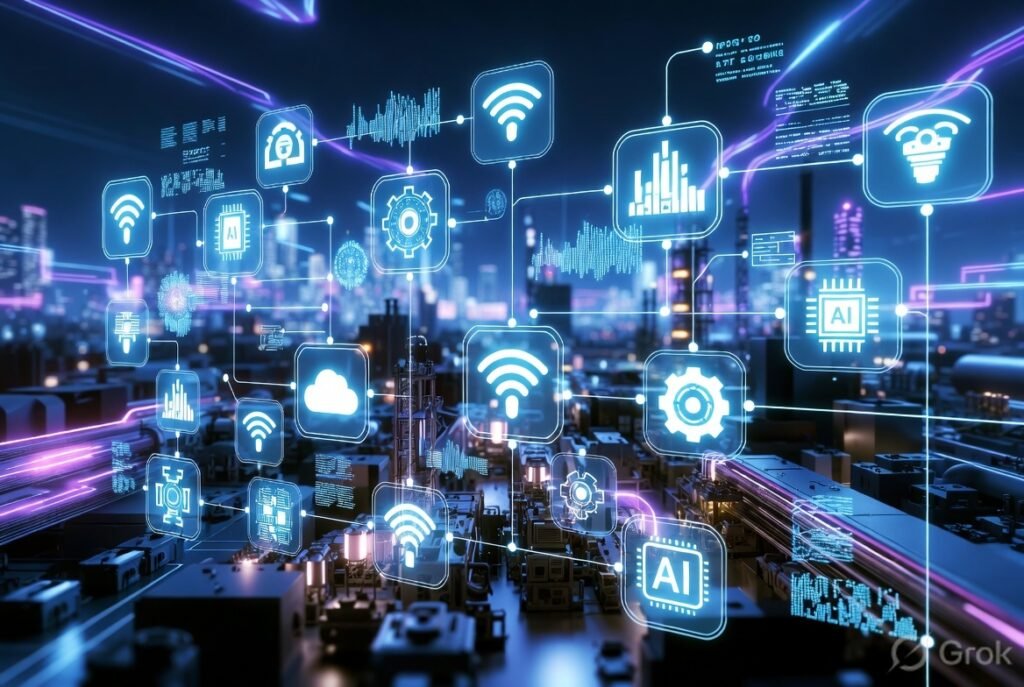
The way machines talk, analyze, and act is changing faster than ever. Cities, factories, and homes are becoming smarter every year. At the centre of this shift is the Internet of Things (IoT), a system where devices connect and share data in real time.
The focus today is on IoT future trends shaping smart industry guide 2026 now, where technology is no longer just supporting operations but actively making decisions. These changes are not limited to big companies. Even small businesses are starting to depend on connected systems.
In this article, we explore how IoT future trends are shaping industries, what innovations are driving this transformation, and what it means for the next few years. You will also see real use cases and practical insights that explain where this technology is heading.
What is Driving IoT Future Trends in 2026?
The evolution of IoT future trends is strongly connected to faster networks, cheaper sensors, and advanced analytics. Together, they create systems that learn and respond without human intervention.
Internet of Things is no longer experimental. It is now part of everyday business operations.
Key drivers include:
- Growth of 5G connectivity
- Affordable smart sensors
- Cloud computing expansion
- AI-based automation
- Edge computing adoption
These technologies are pushing industries toward real-time decision-making.
IoT Future Trends Shaping Smart Industry Guide 2026 Now
This section explains the most important IoT future trends shaping smart industry guide 2026 now and how they impact real-world systems.
1. AI-Powered IoT Systems
One of the strongest IoT future trends is the combination of AI and connected devices.
Machines are no longer just collecting data. They are now analyzing it and acting instantly.
For example:
- Smart factories predict machine failures
- Hospitals monitor patient health in real time
- Retail systems adjust inventory automatically
This shift is often called intelligent automation.
2. Rise of Edge Computing in IoT
Data is growing too fast for cloud-only systems. That is why edge computing is becoming essential in IoT future trends shaping smart industry guide 2026 now.
Instead of sending data to distant servers, devices now process information locally.
Benefits include:
- Faster response time
- Lower network load
- Improved security
- Reduced downtime
This trend is especially important in manufacturing and autonomous systems.
3. Smart Cities Powered by IoT Networks
Urban development is heavily influenced by IoT future trends.
Cities are using sensors to manage:
- Traffic flow
- Waste collection
- Energy usage
- Public safety systems
Smart City systems are becoming a major part of government planning across the world.
For example, traffic lights now adjust based on congestion instead of fixed timers.
4. Industrial IoT (IIoT) Transformation
Industry 4.0 is one of the strongest areas influenced by IoT future trends.
Factories now use connected machines to:
- Predict equipment failures
- Improve production efficiency
- Reduce waste
- Automate quality checks
This reduces human error and increases productivity significantly.
5. IoT Security and Privacy Evolution
As devices increase, security becomes a major concern in IoT future trends shaping smart industry guide 2026 now.
Cybersecurity systems are evolving to:
- Detect threats in real time
- Encrypt device communication
- Prevent unauthorized access
- Monitor network behavior continuously
Security is now built into IoT systems from the start, not added later.
6. Expansion of IoT in Healthcare
Healthcare is one of the fastest-growing sectors influenced by IoT future trends.
Applications include:
- Remote patient monitoring
- Smart wearables
- Connected medical devices
- AI-based diagnosis support
Doctors can now track patients without physical visits, improving care quality and speed.
7. Growth of IoT in Supply Chain & Logistics
Logistics systems are becoming smarter due to IoT future trends shaping smart industry guide 2026 now.
Companies now track:
- Delivery vehicles in real time
- Product conditions during transport
- Warehouse inventory automatically
This reduces delays and improves customer satisfaction.
Real-World Example of IoT Future Trends
A manufacturing company in Asia implemented IoT sensors across its machines. Within six months:
- Machine downtime reduced by 30%
- Production efficiency improved by 22%
- Maintenance costs dropped significantly
This shows how IoT future trends are not theoretical anymore. They are delivering measurable results.
Internal & External Insights
You can explore more related insights here:
- Internal resource: IoT Insights Hub
For broader technical understanding of connected systems:
- External reference: IBM IoT Overview
Frequently Asked Questions
What are IoT future trends?
They are upcoming developments in connected devices, including AI integration, smart automation, and edge computing.
Why are IoT future trends important?
They help industries improve efficiency, reduce costs, and make faster decisions using real-time data.
Which industries benefit most?
Manufacturing, healthcare, logistics, agriculture, and smart cities benefit the most from IoT advancements.
Final Direction for IoT Future Trends
The evolution of IoT future trends shaping smart industry guide 2026 now is not slowing down. It is accelerating across every major sector.
Businesses that adopt early gain stronger efficiency, better insights, and long-term competitive advantage. Those who delay often struggle to catch up later.
The real shift is simple: systems are moving from connected to intelligent.
About The Author