Smart Homes: 7 Proven Ways to Improve Comfort
What Are Smart Homes?
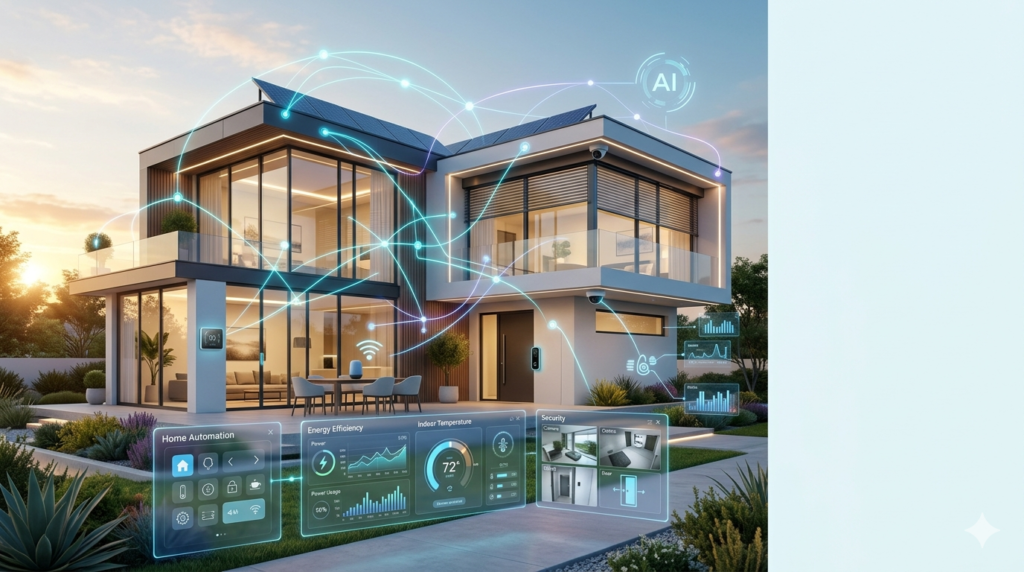
Smart Homes are residential spaces equipped with connected devices that communicate through the internet and automation platforms.
These devices can monitor, control, and automate various household functions.
Common examples include:
- Smart lighting
- Smart thermostats
- Voice assistants
- Smart locks
- Security cameras
- Smart appliances
- Connected entertainment systems
The goal is simple: make daily living easier, safer, and more efficient.
Why Smart Homes Are Becoming More Popular
Modern homeowners expect convenience.
At the same time, rising energy costs and increasing security concerns are encouraging people to invest in smarter solutions.
Smart Homes help address these challenges by offering:
- Greater comfort
- Better energy management
- Improved home security
- Time-saving automation
- Enhanced control from anywhere
As a result, the global smart home market continues to grow rapidly.
1. Automated Climate Control for Perfect Comfort
Few things affect comfort more than indoor temperature.
Traditional heating and cooling systems often waste energy because they operate on fixed schedules.
Smart thermostats use sensors and learning algorithms to adjust temperatures automatically.
Benefits include:
- Consistent comfort
- Reduced energy waste
- Lower electricity bills
- Personalised settings
For example, your thermostat can lower cooling when nobody is home and restore comfortable temperatures before you return.
2. Smart Lighting That Adapts to Your Lifestyle
Lighting plays a major role in creating a comfortable environment.
Smart Homes allow users to customise lighting based on time, activity, or personal preference.
Smart lighting systems can:
- Adjust brightness automatically
- Change colour temperatures
- Follow daily routines
- Respond to voice commands
Consequently, homeowners enjoy a more personalised living experience.
Many families also report improved sleep quality after using automated lighting schedules.
3. Voice-Controlled Convenience
Voice assistants have become one of the most popular smart home technologies.
Instead of manually operating devices, users simply speak commands.
Common tasks include:
- Turning lights on or off
- Playing music
- Setting reminders
- Controlling appliances
- Checking weather updates
This hands-free convenience saves time and makes daily routines easier.
4. Improved Home Security and Peace of Mind
Comfort is not just about convenience. It is also about feeling safe.
Smart Homes provide advanced security features that help homeowners monitor and protect their property.
Popular security solutions include:
- Smart cameras
- Video doorbells
- Motion detectors
- Smart locks
- Mobile security alerts
For instance, homeowners can view live camera feeds from anywhere using a smartphone.
This added visibility improves peace of mind whether they are at work or travelling.
5. Energy Efficiency Without Sacrificing Comfort
Many homeowners assume comfort requires higher energy consumption.
However, Smart Homes prove otherwise.
Connected systems continuously monitor energy usage and optimise performance.
Examples include:
- Smart thermostats
- Automated lighting
- Energy monitoring devices
- Smart appliances
As a result, households often reduce energy costs while maintaining comfortable living conditions.
This balance is one reason why smart home adoption continues to increase.
6. Smarter Entertainment Experiences
Entertainment has become a major part of modern home life.
Smart Homes integrate televisions, speakers, streaming services, and gaming systems into a connected ecosystem.
Homeowners can:
- Control entertainment with voice commands
- Create custom viewing environments
- Synchronise audio across rooms
- Automate media settings
These features create a seamless entertainment experience for families and guests.
7. Remote Control from Anywhere
One of the most valuable benefits of Smart Homes is remote accessibility.
Using mobile applications, homeowners can manage devices from virtually anywhere.
Whether travelling or working, users can:
- Lock doors
- Monitor security cameras
- Adjust temperatures
- Control lighting
- Receive system alerts
Consequently, homeowners stay connected to their property at all times.
This flexibility adds both convenience and reassurance.
Real-World Example of Smart Home Comfort
Consider a family living in a busy urban area.
Before upgrading to smart technology, they manually adjusted lights, air conditioning, and security systems daily.
After installing smart home devices, many tasks became automated.
The results included:
- Lower electricity bills
- Improved comfort
- Better security
- More free time
Small daily improvements combined to create a noticeably better living experience.
Technologies Powering Smart Homes
Several technologies work together to create connected living environments.
Internet of Things (IoT)
IoT devices collect and share data between connected systems.
Artificial Intelligence
AI helps systems learn user preferences and automate decisions.
Cloud Computing
Cloud platforms store and process information securely.
Mobile Applications
Smartphone apps provide remote access and control.
Wireless Connectivity
Wi-Fi, Bluetooth, and Zigbee enable communication between devices.
Together, these technologies form the foundation of modern Smart Homes.
Challenges Homeowners Should Consider
While Smart Homes offer significant advantages, there are important considerations.
Privacy and Data Security
Connected devices collect large amounts of information.
Strong passwords and regular software updates help protect user privacy.
Device Compatibility
Not all devices work together seamlessly.
Choosing products from compatible ecosystems simplifies setup and management.
Initial Costs
Some smart home technologies require upfront investment.
However, many homeowners recover costs through energy savings and improved efficiency.
Frequently Asked Questions
What are Smart Homes?
Smart Homes use connected devices and automation technologies to improve comfort, convenience, security, and efficiency.
How do Smart Homes improve comfort?
They automate lighting, climate control, security, and entertainment systems based on user preferences.
Are Smart Homes energy efficient?
Yes. Smart thermostats, lighting systems, and appliances help reduce energy consumption while maintaining comfort.
Can Smart Homes be controlled remotely?
Absolutely. Most smart home devices can be monitored and controlled through smartphone applications.
The Future of Comfortable Living
The concept of home has evolved dramatically over the past decade. Today’s homeowners expect more than just shelter. They want convenience, efficiency, security, and personalised experiences.
Smart Homes deliver all these benefits through intelligent automation and connected technology. From climate control and lighting to security and entertainment, smart systems help create living spaces that adapt to people’s needs.
As technology continues to advance, smart homes will become even more intuitive and accessible. What seems innovative today may soon become a standard feature in homes around the world.
Want to explore more connected technologies? Check out our guide on Smart Infrastructure to discover how IoT and automation are transforming cities, buildings, and public services. You can also learn more about smart home technology trends through the Consumer Technology Association (CTA).
The most comfortable home isn’t necessarily the biggest one—it’s the one that understands how you live.
About The Author