Smart Energy Management: 7 Proven Ways to Cut Costs
Every Unit of Energy Matters More Than Ever
Electricity bills are rising. Businesses face increasing operational costs. At the same time, governments and consumers expect greater sustainability. As a result, organisations are looking for practical ways to use energy more efficiently without affecting productivity.
This is where Smart Energy Management makes a real difference.
Instead of relying on manual monitoring and outdated systems, smart energy solutions use data, automation, and connected devices to optimise energy consumption. They help businesses identify waste, improve efficiency, and reduce costs in real time.
Whether you manage a manufacturing plant, commercial building, smart city project, or even a large office, understanding Smart Energy Management can help you make better decisions and achieve long-term savings.
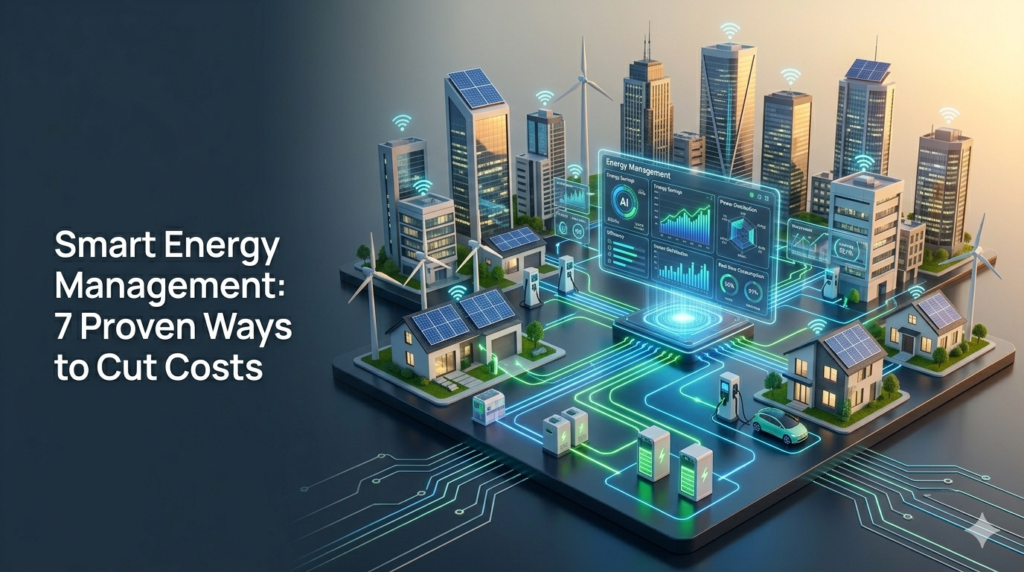
Image Alt Text: Smart Energy Management dashboard monitoring energy consumption in real time
What Is Smart Energy Management?
Smart Energy Management refers to the use of advanced technologies to monitor, control, and optimise energy consumption.
These technologies include:
- IoT sensors
- Smart meters
- Energy management software
- Artificial intelligence
- Cloud analytics
- Automation systems
Together, these tools provide real-time visibility into energy usage patterns. They also help organisations identify inefficiencies and take corrective action quickly.
Unlike traditional energy management methods, smart systems continuously analyse data and provide actionable insights.
Why Smart Energy Management Is Becoming Essential
Energy costs represent a significant portion of operational expenses for many organisations.
According to industry reports, businesses can reduce energy consumption by 10% to 30% through effective energy monitoring and optimisation.
Several factors are driving the adoption of Smart Energy Management:
- Rising electricity costs
- Sustainability goals
- Regulatory compliance
- Demand for operational efficiency
- Growth of smart buildings and smart cities
Furthermore, organisations now have access to affordable IoT devices and cloud-based analytics platforms, making implementation easier than ever.
1. Monitor Energy Usage in Real Time
One of the biggest advantages of Smart Energy Management is real-time visibility.
Many businesses only review energy bills at the end of the month. By then, opportunities for savings have already been missed.
Smart monitoring systems provide instant insights into:
- Equipment performance
- Energy consumption patterns
- Peak demand periods
- Unusual usage spikes
For example, a manufacturing facility can identify a machine that consumes more electricity than expected and investigate the issue immediately.
As a result, businesses gain better control over their energy costs.
2. Use Smart Meters for Accurate Data
Traditional meters provide limited information.
Smart meters, however, collect detailed energy consumption data throughout the day.
Benefits of smart meters include:
- Improved billing accuracy
- Real-time reporting
- Better forecasting
- Faster issue detection
Many organisations discover hidden inefficiencies after installing smart meters. Consequently, they can make informed decisions based on actual consumption patterns rather than assumptions.
3. Automate Energy-Intensive Operations
Automation plays a critical role in Smart Energy Management.
Modern systems can automatically adjust energy usage based on demand, occupancy, or operating conditions.
Examples include:
- Turning off unused equipment
- Adjusting HVAC systems automatically
- Managing lighting schedules
- Optimising production processes
For instance, smart office buildings often reduce lighting levels in unoccupied areas. This simple adjustment can generate substantial savings over time.
4. Leverage IoT Sensors for Better Efficiency
IoT technology has transformed the way organisations manage energy.
Connected sensors continuously collect data from equipment, buildings, and industrial systems.
These sensors can monitor:
- Temperature
- Humidity
- Occupancy
- Machine performance
- Power consumption
By combining sensor data with analytics platforms, businesses can identify waste and improve operational efficiency.
Many smart factories now rely on IoT-based Smart Energy Management systems to optimise production while reducing electricity costs.
5. Implement Predictive Maintenance
Equipment failures often lead to increased energy consumption.
Machines that operate inefficiently typically consume more power than healthy equipment.
Predictive maintenance uses data analytics and machine learning to identify potential problems before they become serious.
Benefits include:
- Lower energy waste
- Reduced downtime
- Extended equipment life
- Lower maintenance costs
For example, a motor with worn components may consume significantly more electricity than normal. Predictive maintenance helps identify the issue early.
As a result, businesses avoid unnecessary energy expenses.
6. Optimise Peak Demand Management
Many utility providers charge higher rates during peak demand periods.
Without proper monitoring, organisations may unknowingly consume excessive energy during these expensive time windows.
Smart Energy Management systems help businesses:
- Identify peak usage periods
- Shift non-essential operations
- Balance energy loads
- Reduce demand charges
Consequently, organisations can lower utility bills while maintaining operational performance.
This strategy is especially valuable for manufacturing facilities and large commercial buildings.
7. Integrate Renewable Energy Sources
Renewable energy is becoming an important part of modern energy strategies.
Solar panels, wind energy systems, and battery storage solutions can reduce dependence on traditional electricity sources.
However, managing multiple energy sources manually can be challenging.
Smart Energy Management platforms help organisations:
- Monitor renewable energy production
- Manage battery storage
- Balance energy demand
- Improve energy distribution
Therefore, businesses can maximise the value of their renewable energy investments while reducing overall costs.
Real-World Example of Smart Energy Management
A large manufacturing facility in India implemented an IoT-based Smart Energy Management solution across its production units.
The company installed:
- Smart meters
- Connected sensors
- Energy analytics software
Within twelve months, the facility achieved:
- 18% reduction in electricity consumption
- Improved equipment efficiency
- Lower maintenance costs
- Better operational visibility
This example highlights how data-driven energy management can deliver measurable business results.
Common Challenges and How to Overcome Them
High Initial Investment
Some organisations hesitate because of implementation costs.
However, many smart energy projects generate savings that offset the investment within a few years.
Data Integration Issues
Different systems often use different formats.
Choosing scalable platforms with strong integration capabilities can solve this challenge.
Cybersecurity Risks
Connected devices increase security requirements.
Businesses should implement:
- Strong authentication
- Device encryption
- Network monitoring
- Regular software updates
These measures help protect energy management systems from cyber threats.
Frequently Asked Questions
What is Smart Energy Management?
Smart Energy Management uses connected technologies and data analytics to monitor and optimise energy consumption.
How does Smart Energy Management reduce costs?
It identifies inefficiencies, automates operations, reduces waste, and improves energy usage decisions.
Is Smart Energy Management suitable for small businesses?
Yes. Many affordable solutions are available for businesses of all sizes.
What technologies support Smart Energy Management?
Common technologies include IoT sensors, smart meters, AI analytics, cloud platforms, and automation systems.
Turning Energy Data into Real Savings
Energy efficiency is no longer just a sustainability goal. It has become a business necessity.
Smart Energy Management helps organisations reduce waste, lower operating costs, improve equipment performance, and support environmental objectives. More importantly, it provides the insights needed to make smarter decisions every day.
As energy demands continue to grow, businesses that invest in intelligent energy strategies will be better positioned for long-term success.
Want to explore more smart technology trends? Read our guide on Edge Computing Benefits and discover how connected technologies are transforming modern industries. You can also learn more about energy efficiency best practices from the International Energy Agency (IEA).
Start evaluating your energy usage today and take the first step towards a smarter, more efficient future.
About The Author