Exploring the Transformative Power of IoT Technology in Everyday Life
Introduction to IoT Technology
The Internet of Things (IoT) represents a significant advancement in technology, characterized by the interconnectivity of various devices that communicate and share data over the internet. This ecosystem consists of a wide array of physical objects, ranging from everyday household items to sophisticated industrial machinery. Each of these devices is embedded with sensors, software, and other technologies that allow them to collect and exchange data seamlessly. The integration of IoT technology into our daily lives is transforming how we interact with the world around us.
A critical component of IoT is the ability of devices to connect to the internet, enabling them to relay information and receive commands remotely. This capability permits real-time monitoring and control of various functions, enhancing convenience and efficiency. For instance, smart home devices, such as thermostats, lights, and security systems, utilize IoT technology to allow users to adjust settings via smartphones or voice commands, making households increasingly automated.
Moreover, the implications of IoT extend beyond personal use to various sectors including agriculture, healthcare, transportation, and manufacturing. In agriculture, IoT sensors monitor soil moisture levels, temperature, and humidity, providing farmers with data to optimize crop yields. In healthcare, wearable devices track patients’ vital signs, enabling remote monitoring and timely intervention. Such applications underscore the profound impact IoT technology has on optimizing processes, increasing productivity, and enhancing service delivery.
In summary, the adoption of IoT technology signifies a pivotal shift toward a more interconnected and intelligent world. As more devices become integrated into this network, the potential for innovation and improvement in everyday life expands, offering a glimpse into a future where connectivity shapes our environments and experiences in unprecedented ways.
Smart Homes: The Future of Living
The rise of smart home devices represents a significant shift in how we perceive and interact with our living environments. These technological innovations have transformed daily household tasks through automation and connectivity, offering a glimpse into the future of living. With smart thermostats, security systems, and voice-activated assistants becoming increasingly common, individuals are experiencing enhanced convenience and efficiency in their everyday routines.
Smart thermostats are one of the most prevalent examples of how IoT technology can optimize home energy usage. These devices learn from user behavior, automatically adjusting heating and cooling settings for maximum efficiency. As a result, homeowners can enjoy a comfortable living space while simultaneously reducing their energy bills and carbon footprint. Remote access via smartphones also allows individuals to monitor and control their home’s climate, ensuring optimal comfort regardless of their physical location.
Security systems have similarly evolved with the advent of IoT technology. Modern smart security solutions include cameras, motion sensors, and door locks that can be accessed remotely. Users can receive real-time alerts on their devices, providing peace of mind and enhancing safety. Features such as video monitoring and remote lock management are pivotal in offering enhanced security that traditional systems cannot provide.
Voice-activated assistants encapsulate the convenience of modern smart home technology. These devices serve as central hubs, allowing users to control various smart devices within the home using simple voice commands. This level of integration elevates the overall user experience by enabling hands-free control for tasks ranging from adjusting lighting to playing music or setting reminders. Such seamless connectivity makes daily routines more manageable and allows for deeper engagement with one’s living environment.
In essence, the proliferation of smart home technology signals a transformative shift towards increased automation, energy efficiency, and enhanced security. These innovations are not merely trends; they signify a new era in which homes become more adaptive and responsive to the needs of their inhabitants.
Connected Cars: Revolutionizing Transportation
The advent of Internet of Things (IoT) technology has significantly transformed the automotive industry, leading to the emergence of connected cars that enhance the driving experience through innovative features. One of the primary benefits of connected vehicles is real-time navigation, provided by integrating GPS data with cloud-based resources. This capability offers drivers the ability to receive live traffic updates, suggesting alternative routes to avoid congestion. By employing real-time analytics, connected cars can optimize travel time, helping drivers reach their destinations with greater efficiency.
In addition to navigation, IoT technology enables remote diagnostics, a game-changing feature for maintenance and repairs. Connected vehicles can monitor their own health by collecting data on various components, such as the engine, brakes, and tire pressure. This invaluable information is transmitted to the manufacturer’s service centers, allowing for predictive maintenance before a problem escalates. As a result, vehicle owners can enjoy peace of mind, optimize repair schedules, and significantly reduce unexpected breakdowns.
Another innovative aspect of connected cars is vehicle-to-everything (V2X) communication. This technology facilitates communication between vehicles, infrastructure, and pedestrians, allowing for seamless interactions that enhance road safety. For instance, connected cars can alert drivers about potential hazards or traffic conditions ahead, reducing the likelihood of accidents. Moreover, the integration of V2X communication can improve traffic flow, as vehicles can communicate with traffic signals to optimize stop-and-go patterns.
The overarching benefits of connected vehicles extend beyond individual experiences, contributing to broader societal goals such as reducing traffic congestion and emissions. By encouraging more efficient driving habits and facilitating smarter traffic management, IoT-enabled cars offer a sustainable approach to modern transportation. As the automotive industry continues to embrace these technologies, the future of transportation looks increasingly promising.
Healthcare: A New Era of Patient Care
The integration of IoT technology in healthcare represents a significant advancement in the quality and efficiency of patient care. Connected devices, such as wearables and remote monitoring tools, have transformed traditional healthcare practices into more proactive and informed approaches. One of the primary benefits of IoT in healthcare is the ability to facilitate proactive health management. By continuously collecting data on patients’ vital signs and health metrics, healthcare providers can identify potential health issues before they escalate into critical conditions. This shift toward preventive care not only enhances patient outcomes but also reduces the overall healthcare costs associated with emergency interventions.
Real-time data analytics serves as another critical component of IoT’s impact on healthcare. The instantaneous collection and analysis of health data enable healthcare professionals to make informed decisions rapidly. For example, smart devices can track a patient’s heart rate or glucose levels, providing alerts for any abnormalities that may require immediate attention. By utilizing sophisticated algorithms and data analysis techniques, professionals can monitor trends and gain valuable insights into each patient’s health journey. This capability leads to more personalized care tailored to the individual’s needs.
Moreover, IoT fosters enhanced communication between patients and healthcare providers. The implementation of telehealth and remote consultations facilitates timely interactions, ensuring that patients receive prompt guidance without the need for in-person visits. This connectivity is particularly beneficial for patients managing chronic illnesses who require regular check-ins and support. Enhanced communication built on IoT platforms not only improves patient engagement but also strengthens the provider-patient relationship. As healthcare continues to evolve, the IoT’s potential to reshape patient care through improved health management, real-time analytics, and better communication will undoubtedly lead to a healthier future for individuals and communities alike.
Industrial Automation: Efficiency and Productivity
The integration of Internet of Things (IoT) technology into industrial automation has ushered in a new era of efficiency and productivity across various sectors. By utilizing interconnected devices, manufacturers can streamline processes, enhance operational oversight, and foster a more responsive environment to market demands. Smart factories, relying heavily on IoT solutions, exemplify this transformation by employing advanced data analytics and automation to optimize production lines.
In a smart factory setting, machines and equipment are interconnected, enabling them to communicate vital information in real-time. This communication facilitates seamless coordination and workflow management, ensuring that operations are synchronized and responsive to changes. For instance, when a machine detects a potential malfunction, it can automatically alert maintenance teams, thereby reducing downtime and mitigating loss of productivity. This proactive approach is often referred to as predictive maintenance, a pivotal aspect of modern industrial automation that reduces the risk of unplanned disruptions.
Moreover, IoT technology plays a significant role in improving supply chain management. By leveraging IoT sensors and devices, businesses can track inventory levels, monitor equipment performance, and gain insights into logistics. Real-time data analytics enables managers to make informed decisions, optimize resource allocation, and enhance delivery timelines. By integrating these smart solutions, companies can minimize costs while maximizing throughput and quality, leading to significant improvements in profitability.
The adoption of IoT technology in industrial automation is not merely about technological advancement; it represents a strategic shift towards increased accountability and transparency within operations. Organizations embracing these IoT-driven efficiencies are witnessing remarkable transformations, paving the way for a more agile and connected industrial landscape. Overall, the intersection of IoT and industrial processes underscores the potential to revolutionize how businesses operate and respond to ever-changing market dynamics.
IoT Security Challenges and Solutions
The rapid adoption of Internet of Things (IoT) technology has brought many benefits, yet it has also introduced significant security challenges. With billions of connected devices in use today, each presents potential vulnerabilities that can be exploited by malicious actors. One major concern is data breaches, where sensitive information can be intercepted and misused. IoT devices often collect personal data, which, if inadequately protected, can lead to severe privacy infringements. Moreover, unauthorized access to these devices can allow cybercriminals to control systems, compromising not only individual users but also creating widespread risks across networks.
Security challenges in IoT can arise from various factors, including weak passwords, insufficient encryption, and outdated software. Many users tend to overlook the importance of changing default credentials on devices, making it easy for attackers to gain unauthorized access. Additionally, inadequate firmware updates can leave devices vulnerable to known exploits. Such factors highlight the need for robust security measures in the design and deployment of IoT technology.
To address these challenges, several best practices should be implemented. Firstly, users should prioritize the use of strong, unique passwords for all IoT devices and routinely update them. Employing multi-factor authentication adds an extra layer of security. Moreover, ensuring that devices receive regular software updates is crucial in mitigating risks associated with outdated systems. Encryption protocols can further protect data in transit, rendering intercepted information unreadable to unauthorized parties.
Network segmentation is another effective strategy that involves separating IoT devices from other critical systems. This reduces the risk of a single compromised device affecting the entire network. Furthermore, educating users about the importance of secure practices and privacy policies is essential for fostering a culture of security awareness in the digital age.
The Role of Data Analytics in IoT
The Internet of Things (IoT) generates an immense volume of data through interconnected devices, creating a rich landscape for data analytics. This data, often referred to as “big data,” arises from various sensors and systems embedded in everyday objects, which provide real-time information on user behaviors, environmental conditions, and machine functionalities. Analyzing this data is crucial, as it offers organizations significant insights, enabling them to make better-informed decisions that enhance operations and improve service delivery.
Data analytics plays a pivotal role in transforming raw data collected from IoT devices into actionable information. Various analytical tools and techniques, such as predictive analytics, machine learning, and data visualization, are employed to uncover patterns, trends, and anomalies. For instance, in the retail sector, businesses utilize analytical insights to understand customer preferences and behaviors, allowing them to tailor marketing strategies and optimize inventory management. This responsiveness enables retailers to enhance customer satisfaction and drive sales reports.
In healthcare, data analytics derived from IoT devices can lead to significant advancements in patient care. Wearable devices, such as fitness trackers or smartwatches, continuously collect health metrics, and through careful analysis of this information, healthcare providers can monitor patient health in real-time. This proactive approach not only improves treatment outcomes but can also alert professionals to potential health risks before they escalate.
Transportation is another sector benefiting from data analytics in the IoT ecosystem. Smart sensors installed in vehicles provide data on traffic patterns, road conditions, and vehicle performance. Analyzing this data helps transportation agencies optimize traffic flow, reduce accidents, and improve the efficiency of public transit systems. Consequently, the integration of data analytics with IoT technology is instrumental in driving innovation and operational improvements across various industries.
Future Trends in IoT Technology
The Internet of Things (IoT) technology continues to evolve at a rapid pace, paving the way for significant advancements that will reshape various aspects of daily life. One of the most notable trends shaping the future of IoT is the deployment of 5G connectivity. The increased bandwidth and reduced latency offered by 5G networks enable an unprecedented number of devices to connect simultaneously without compromising performance. This advancement will facilitate the seamless communication between IoT devices, empowering industries ranging from healthcare to agriculture to employ real-time data collection and analysis, enhancing operational efficiency.
Another key trend is the integration of artificial intelligence (AI) with IoT systems. As devices become smarter with AI algorithms, they will not only improve data processing capabilities but also optimize decision-making processes. Smart appliances, for instance, will learn user preferences and automate tasks accordingly, thereby improving user experiences while reducing energy consumption. AI’s ability to process vast amounts of data generated by IoT devices will also bring forth predictive analytics, enabling proactive maintenance in sectors like manufacturing and transportation, thereby minimizing downtime and improving overall productivity.
Additionally, the growing significance of edge computing will transform how IoT data is processed. By decentralizing processing capabilities, edge computing reduces the need for data to be sent to distant cloud servers, resulting in quicker response times and lower bandwidth usage. This trend is particularly important for applications that require real-time processing, such as autonomous vehicles and smart grids. Moreover, it enhances data privacy and security by allowing sensitive information to be processed locally instead of transmitting it over potentially insecure networks.
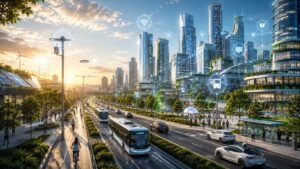
Finally, as cities continue to evolve into smart environments, the focus on sustainable development through IoT technology is surging. Emerging trends in smart city initiatives aim to enhance urban living by utilizing IoT solutions for efficient resource management, environmental monitoring, and improved public services. Implementing sensors to track air quality and traffic patterns is one example of how IoT can contribute to healthier and more sustainable urban ecosystems, promoting a higher quality of life for residents. The future of IoT promises to bring transformative changes that will significantly impact various sectors and daily activities, making life more connected and efficient.
Conclusion: Embracing the IoT Revolution
The Internet of Things (IoT) has undeniably become a pivotal force in reshaping various aspects of daily life. Throughout this discussion, we explored how IoT technologies integrate seamlessly into our environments, influencing sectors such as healthcare, smart homes, transportation, and agriculture. These advancements not only enhance convenience and efficiency but also contribute to improved quality of life for individuals and communities alike. By facilitating real-time data exchange and automation, IoT devices empower users to make informed decisions and optimize their routines.
However, alongside the myriad benefits that IoT technology provides, challenges emerge that must be addressed. Issues concerning data privacy, security risks, and the potential for technological dependence highlight the need for cautious adoption. As we embrace the IoT revolution, it becomes vital to prioritize responsible implementation practices. This includes ensuring robust cybersecurity measures, fostering user awareness regarding data sensitivity, and creating regulations that safeguard individual rights in an increasingly connected world.
Moreover, collaboration among various stakeholders—from developers and policymakers to users—is essential in creating an IoT ecosystem that maximizes benefits while minimizing risks. By promoting innovations that are ethical and user-centric, we can harness the full potential of IoT technology, driving societal change while maintaining the public’s trust.
In conclusion, the transformative effects of IoT technology on everyday life cannot be overstated. As we stand on the brink of a more interconnected future, embracing the possibilities offered by IoT can lead to unprecedented advancements. Yet, it is equally important to navigate the complexities that accompany this revolution with awareness and responsibility, thereby ensuring that the benefits of IoT can be enjoyed by all while mitigating potential concerns.
About The Author