Smart Cities: How Technology Is Shaping Better Communities
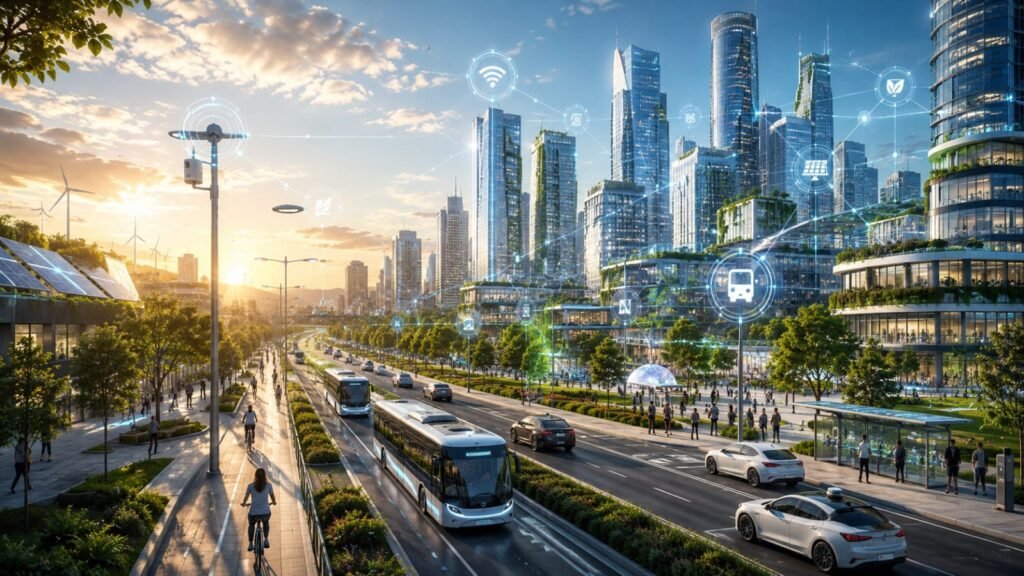
Smart cities are no longer a concept from the future. They are becoming a reality in many parts of the world. From intelligent traffic systems to smart energy management, technology is changing how people live, work, and interact with their surroundings.
Meta Description: Discover how smart cities use technology to improve transport, safety, energy efficiency, and quality of life while creating better communities.
A New Chapter in Urban Living
Imagine leaving home in the morning and reaching your office without getting stuck in traffic. Streetlights adjust automatically based on movement. Public services respond faster because city systems can identify issues in real time.
This is exactly how Smart Cities: How Technology Is Shaping Better Communities is becoming a reality across the globe.
As urban populations continue to grow, cities face several challenges. Traffic congestion, pollution, energy consumption, and waste management are becoming harder to manage. Fortunately, modern technology offers practical solutions. Smart cities combine data, connectivity, and digital infrastructure to create safer, cleaner, and more efficient urban environments.
Today, governments and urban planners are investing heavily in smart city initiatives to improve the quality of life for citizens while ensuring sustainable growth.
Suggested Featured Image
Image: Smart city skyline with connected digital infrastructure
Alt Text: Smart Cities How Technology Is Shaping Better Communities with connected infrastructure
What Are Smart Cities?
A smart city uses digital technologies and connected devices to improve city operations and public services.
These technologies collect and analyse data from various sources. The information helps authorities make better decisions and deliver services more efficiently.
Key technologies used in smart cities include:
- Internet of Things (IoT)
- Artificial Intelligence (AI)
- Cloud Computing
- Edge Computing
- Big Data Analytics
- Smart Sensors
- 5G Connectivity
Together, these technologies help cities become more responsive to the needs of residents.
Smart Cities: How Technology Is Shaping Better Communities
Technology plays a central role in building stronger communities. It helps city administrators understand problems faster and implement solutions more effectively.
Instead of relying on manual processes, smart cities use real-time data. As a result, services become more efficient and residents enjoy a better experience.
Some of the biggest improvements can be seen in transportation, public safety, environmental management, and healthcare.
Smarter Transportation Systems
Traffic congestion affects millions of people every day.
Smart traffic management systems use sensors and AI-powered analytics to monitor road conditions. Traffic signals adjust automatically based on vehicle flow. Consequently, waiting times decrease and fuel consumption drops.
Several cities worldwide already use intelligent transportation systems to reduce congestion and improve commuter experiences.
Benefits include:
- Reduced traffic jams
- Lower emissions
- Faster emergency response
- Improved public transport schedules
- Better road safety
Improved Public Safety
Public safety remains a top priority for every city.
Smart cities use connected surveillance systems, emergency alert platforms, and predictive analytics to improve security. Authorities can identify unusual activities and respond quickly when incidents occur.
For example, AI-powered cameras can detect traffic accidents instantly and notify emergency services.
As technology continues to evolve, public safety systems become more proactive rather than reactive.
Efficient Energy Management
Energy consumption is a major concern in growing urban areas.
Smart grids help cities monitor electricity usage in real time. They identify inefficiencies and reduce energy waste.
Smart streetlights are another excellent example. These lights automatically adjust brightness levels based on traffic and pedestrian activity.
As a result:
- Energy costs decrease
- Carbon emissions reduce
- Sustainability improves
- Resources are used more efficiently
This creates long-term benefits for both governments and residents.
How IoT Powers Modern Smart Cities
The Internet of Things is one of the most important technologies behind smart cities.
IoT devices collect information from connected systems throughout the city. These devices communicate continuously and provide valuable insights.
Common IoT applications include:
Smart Parking
Drivers often spend considerable time searching for parking spaces.
Smart parking systems provide real-time availability information through mobile apps. Therefore, drivers can find parking quickly and reduce unnecessary travel.
Smart Waste Management
Waste collection becomes more efficient with IoT-enabled bins.
Sensors monitor waste levels and notify collection teams when bins need emptying. This prevents overflow and improves cleanliness across the city.
Smart Water Management
Water scarcity is becoming a serious challenge.
Smart sensors detect leaks, monitor consumption, and improve water distribution systems. Consequently, cities can conserve valuable resources.
For more insights on IoT innovations, explore your internal resource:
Internal Link: /category/iot-technology/
Building Sustainable Communities Through Technology
Sustainability is one of the biggest goals of smart city development.
Cities consume large amounts of energy and resources. Without proper management, environmental challenges continue to grow.
Smart technologies help address these concerns through:
- Renewable energy integration
- Smart irrigation systems
- Green building management
- Air quality monitoring
- Efficient waste recycling
For instance, environmental sensors can track pollution levels in real time. Authorities can then implement measures to improve air quality before problems worsen.
This data-driven approach helps create healthier living environments.
Real-World Examples of Smart Cities
Several cities have successfully adopted smart city technologies.
Singapore
Singapore is often recognised as one of the world’s leading smart cities.
The country uses advanced digital infrastructure, intelligent transportation systems, and smart governance initiatives to improve urban living.
Barcelona
Barcelona has implemented smart lighting, intelligent parking systems, and environmental monitoring solutions.
These initiatives have helped reduce energy consumption while improving public services.
About The Author