How Blockchain Is Transforming Business Security Today
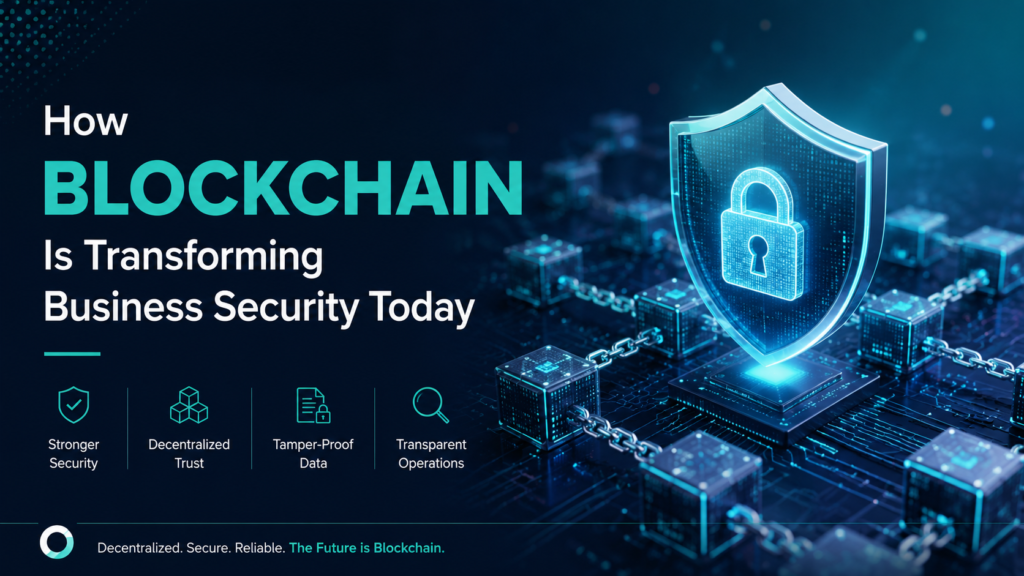
How Blockchain Is Transforming Business Security Today

In today's digital-first world, a single security breach can damage years of hard-earned trust. Businesses handle massive amounts of sensitive data every day, from customer records and financial transactions to confidential contracts and intellectual property. As cyber threats continue to evolve, traditional security systems often struggle to keep up.
This is where Blockchain is changing the game.
What started as the technology behind cryptocurrencies has now become one of the most powerful tools for business security. Companies across industries are using this distributed ledger system to protect data, improve transparency, and reduce the risk of fraud. From banking and healthcare to supply chain management and government services, it's creating a safer digital environment.
Let's explore how this technology is transforming business security and why more organizations are investing in it.
What Is Blockchain?
Blockchain is a decentralized digital ledger that records transactions across multiple computers. Instead of storing information in a single location, data is distributed across a network of connected nodes.
Each record, known as a block, is linked to the previous one. Once information is added, it becomes extremely difficult to modify or delete without network approval.
Key takeaway: This system creates a secure, transparent, and tamper-resistant way to store and share information — without relying on one central authority.
Why Traditional Security Systems Face Challenges
Many organizations still rely on centralized databases. While these systems are widely used, they often create a single point of failure.
Common security challenges include:
- Data breaches
- Unauthorized access
- Insider threats
- Data manipulation
- Fraudulent transactions
- Weak audit trails
Cybercriminals continue to develop more advanced attack methods. That means businesses need stronger, more resilient frameworks to keep pace.
How Blockchain Enhances Business Security
1. Prevents Data Tampering
One of the biggest advantages of this approach is data immutability.
Once a record is added to the chain, changing it becomes extremely difficult. Every transaction receives a unique cryptographic signature and becomes part of a permanent sequence.
For example, a financial institution can use this ledger to store transaction records. If someone attempts to alter an entry, the network immediately detects the change.
This feature significantly reduces the risk of fraud and unauthorized edits.
2. Eliminates Single Points of Failure
Traditional databases store information in one central location. If attackers gain access to that system, they can potentially compromise all of it at once.
A distributed ledger spreads information across multiple nodes instead. There's no single target for hackers to attack.
Even if one node experiences an issue, the rest of the network keeps operating normally — a decentralized structure that improves both security and reliability.
3. Improves Identity Verification
Identity theft remains a major concern for businesses and consumers alike.
Organizations can use this technology to create secure digital identities that are difficult to forge or manipulate.
Financial institutions, for instance, can verify customer identities without repeatedly storing sensitive personal information. That reduces exposure to data breaches while simplifying verification.
The result: stronger customer trust and easier compliance.
4. Increases Transparency
Trust is critical in every business relationship.
A shared ledger creates a transparent record of all activity within the network. Every authorized participant can view transaction histories and verify information independently.
This level of openness helps organizations:
- Detect suspicious activity faster
- Improve accountability
- Reduce disputes
- Simplify audits
- Strengthen compliance efforts
The outcome is greater confidence in day-to-day operations.
Real-World Business Applications
Several global financial institutions are already integrating this infrastructure into daily operations, and healthcare providers are using it to support compliance with data privacy regulations while keeping patient histories accurate and accessible only to authorized parties.
The Role of Smart Contracts in Security
Smart contracts are self-executing agreements stored on a distributed network.
These contracts automatically carry out actions once predefined conditions are met — for example, a supplier agreement that releases payment automatically once goods are delivered and verified.
Benefits include:
- Reduced human error
- Faster processing
- Enhanced transparency
- Lower fraud risk
- Improved compliance
Because the rules are embedded directly within the contract, manipulation becomes significantly harder.
Key Benefits for Businesses
Common Questions About Blockchain Security
No technology is completely immune to risk. That said, this system provides significantly stronger protection than many traditional setups, thanks to its decentralized and cryptographic design.
Yes. Many solutions are now built specifically for businesses of all sizes, offering improved security, transparency, and operational efficiency without enterprise-level overhead.
Not at all. While it gained popularity through crypto, businesses now use this technology across healthcare, finance, logistics, manufacturing, and many other industries.
Costs vary depending on business requirements. Many organizations treat it as a long-term investment, since it can reduce fraud, improve efficiency, and strengthen security over time.
Preparing for a More Secure Future
Digital threats are becoming more sophisticated every year. Businesses can no longer rely solely on traditional security measures to protect critical information.
Blockchain offers a practical answer — secure, transparent, tamper-resistant systems that hold up under pressure. Whether it's protecting customer data, securing financial transactions, or improving supply chain visibility, this technology is helping organizations build stronger foundations for what comes next.
As more industries embrace digital transformation, it will keep playing an important role in shaping secure business operations. Companies exploring its potential today will be better positioned to manage tomorrow's security challenges.
Ready to strengthen your organization's digital security?
Explore how advanced Blockchain solutions can help protect sensitive data, improve transparency, and build long-term trust in an increasingly connected world.
Explore Blockchain Solutions →About The Author